

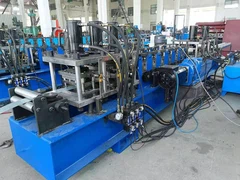

Suhang Machinery Guttter Machine and Downspout Pipe Machine are CommissioningSuhang Machinery Guttter Machine and Downspout Pipe Machine are Commissioning
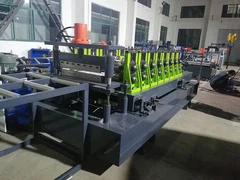
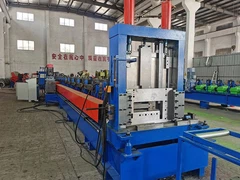
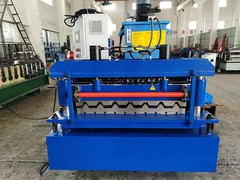
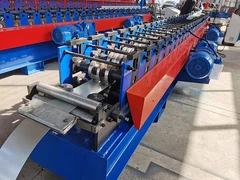
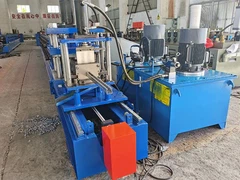
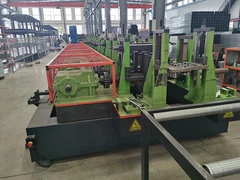
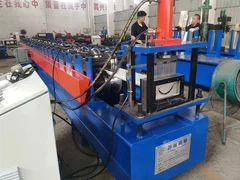
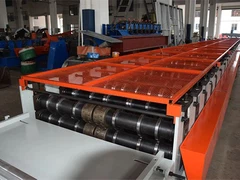
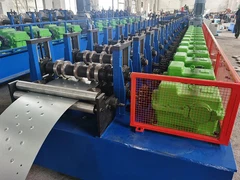
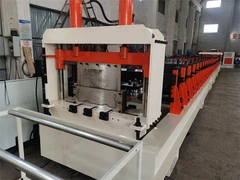
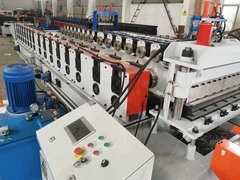
On the morning of July 27, 2026, our workshop floor witnessed a significant progress: the simultaneous commissioning of two new production lines- a downspout pipe roll forming machine and a rain gutter roll forming machine. Both machines had been carefully assembled and installed over the preceding weeks, and the entire team was eager to see them run. However, as is often the case with complex forming machines, the day brought not only excitement but also a formidable engineering challenge.
The gutter roll forming machine, designed for open-profile rain-carrying sections, started up with relatively few glitches. Its forming stations aligned properly. So after a few adjustments to the side guides and exit shear, we produced acceptable gutter products within two hours. The team breathed a collective sigh of relief-one machine down, one to go.
Unlike conventional welded tubes, the downspout pipes are the lock-seam (snap-lock) type-a cylindrical section formed from a single strip of steel whose edges are mechanically interlocked through a series of progressive forming rollers, then tightly clinched to create a rigid, watertight seam. There is no welding, the joint relies purely on the plastic deformation of the interlocking profiles. This makes the seam strong and aesthetically clean, but it also places extreme demands on the seaming mandrel (or core die) that supports the internal profile during the final clinching operation.
When running the machine, the forming stations up to the pre-close section worked beautifully; the strip curved into a near-circular shape with the male and female edges approaching each other. But the moment the partially formed tube reached the seaming station-where the mandrel sits inside the bore and the external fin rollers compress the interlocking lips-the seam catastrophically "exploded." The interlock would not stay engaged, the edges either buckled outward, tore through the zinc coating, or simply sprang apart with a loud pop as the tube exited the last pass. After one frustrating hour, our senior tooling engineer found the reason. The root cause became clear: the mandrel lacked the correct "lead-in" angle and the proper undercut relief to hold the seam closed during the final compression.
Without hesitation, the team removed the mandrel assembly and rushed it to our in-house toolroom to modify the core die. Then we reinstalled the modified mandrel, threaded a fresh coil end through the entry guides, and restarted the line at a reduced speed. The first few feet looked promising-the preform closed smoothly. When the seam reached the seaming rollers, instead of bursting, it clicked into place with a firm, uniform crimp. We ran ten full lengths, stopping every piece to inspect the seam with a feeler gauge and a borescope. Every lock was tight, continuous, and free of cracks. By late afternoon, the downspout line was producing perfect lock-seam tubes at 90% of design speed, with zero rejects.
This debugging episode reinforced a timeless lesson in roll forming: the mandrel is the heart of any lock‑seam tube mill. No amount of external roll adjustment can compensate for an improperly designed internal core. Thanks to our team's sharp diagnostic eye and swift hands on modification, we succeeded in the two machines. Both machines are now ready for formal customer acceptance trials, and we have documented the new mandrel geometry as the standard for all future downspout tooling orders. It was a long, sweaty day – but ultimately, a victory for craftsmanship and practical engineering.


