
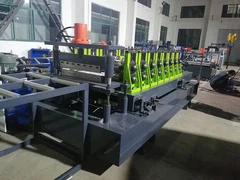
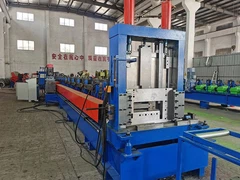
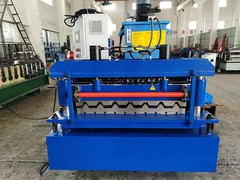
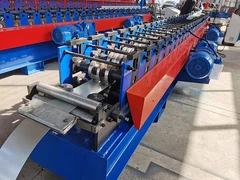
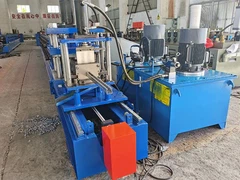
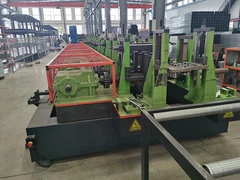
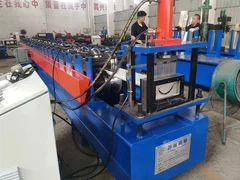
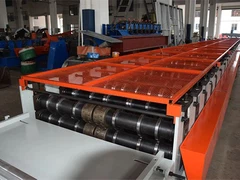
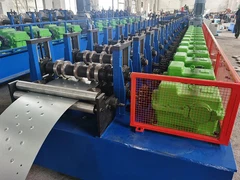
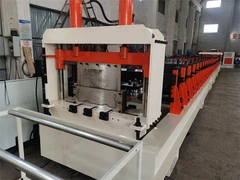

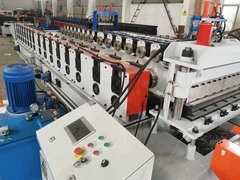
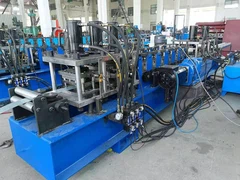

As manufacturing equipment for controllable material molding, the molding machine's structure is composed of multiple precisely integrated functional subsystems to ensure the stability, precision, and efficiency of the processing. These components work collaboratively in areas such as power drive, molding execution, temperature control, mold management, and intelligent control, forming a complete molding operation system.
The power drive system is the core foundation of the molding machine, typically including an electric motor, hydraulic pump station, or servo drive unit. It provides stable and adjustable power output for actions such as screw propulsion, mold closing, injection, and ejection. Hydraulic systems are particularly common in large equipment, achieving high thrust and smooth speed changes; electric and servo drives offer advantages in precision and energy efficiency, making them suitable for small to medium-sized high-precision molding machines.
The molding execution mechanism includes the screw and barrel (injection molding machine), pressure rollers and mold cavity (extrusion and compression molding machine), and blown core mold (blow molding machine), directly acting on the material to complete the melting, compaction, shearing, or molding process. The screw's geometric parameters and rotational speed control determine the plasticizing quality and output; the gap between the pressure rollers and surface treatment affect the profile's dimensional accuracy and surface finish; the shape and surface roughness of the mold cavity determine the final contour and appearance of the product.
The temperature control module consists of heating elements, cooling channels, and temperature sensors, ensuring the material maintains suitable viscosity and flowability within the set temperature range. Heating systems often employ independent zone temperature control to prevent localized overheating or underheating; the cooling system rapidly removes heat through circulating media, shortening the molding cycle and reducing internal stress.
The mold clamping and positioning device is responsible for mold installation, locking, and position calibration, ensuring uniform distribution of clamping force and tight fit of the parting surface, preventing overflow and flash. High-precision guide rails and guide pillars, in conjunction with limit switches, ensure repeatable positioning accuracy of mold opening and closing actions.
The control system integrates a programmable logic controller (PLC), a human-machine interface (HMI), and a data acquisition module, enabling process parameter setting, action sequence programming, abnormal alarms, and fault diagnosis. Modern molding machines can also be connected to industrial networks for remote monitoring and process optimization.
The molding machine achieves high efficiency, precision, and controllability from raw material input to finished product output through the organic synergy of the above structures, providing solid equipment support for modern manufacturing.