

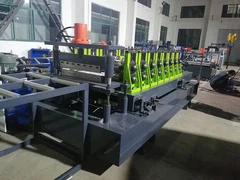
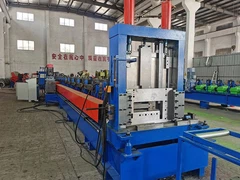
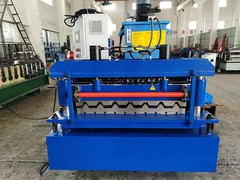
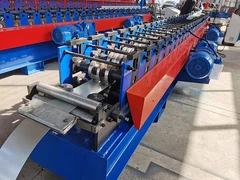
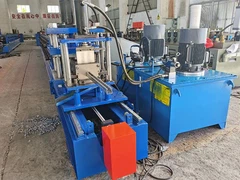
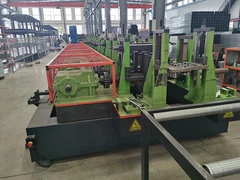
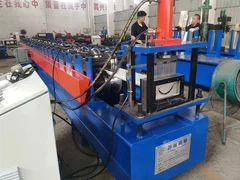
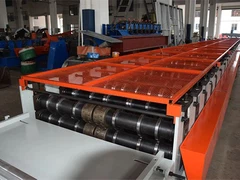
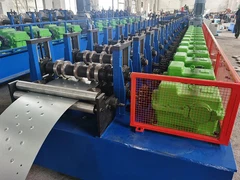
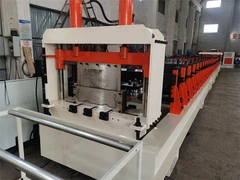

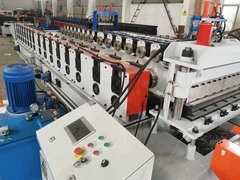
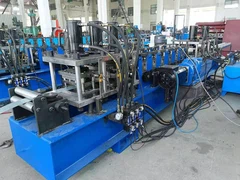

A molding machine is a key manufacturing device that transforms raw materials into products of predetermined shapes and sizes by applying pressure, temperature, or a special energy field. It is widely used in the processing of plastics, rubber, metals, ceramics, and composite materials. Its core function is to achieve controllable shaping of materials, thereby meeting the stringent requirements of industrial products in terms of structural strength, dimensional accuracy, and surface quality.
From a working principle perspective, molding machines can be classified into injection molding machines, extrusion molding machines, compression molding machines, blow molding machines, and autoclave molding machines, depending on the materials and processes being processed. Injection molding machines inject molten plastic at high speed into a closed mold cavity, hold pressure, cool, and then open the mold to remove the product. They are suitable for complex shapes and mass production. Extrusion molding machines use a screw to push molten material through a die to form continuous profiles, commonly used in the manufacture of pipes, sheets, and profiles. Compression molding machines apply pressure and temperature to powdered, granular, or sheet materials, causing them to solidify into a single unit within the mold; they are often used in powder metallurgy, ceramics, and SMC/BMC composite material processing. Blow molding machines give hollow products their contours and are commonly used in bottle and container production.
Molding machines generally consist of a power drive system, molding actuator, temperature control module, mold clamping and positioning device, and control system. The power system provides stable and adjustable pressure or thrust; the temperature control module ensures that the material is processed at suitable viscosity and flowability, preventing charring or unmelted defects; the control system often uses a PLC or CNC platform to set process parameters, manage action timing, and diagnose faults, ensuring the repeatability and stability of the molding process.
Advances in molding technology are reflected in precision and intelligence. High-precision closed-loop control reduces dimensional deviations and internal stress, while processes such as multi-component co-injection and in-mold decoration expand the functionality and aesthetics of finished products. Combined with online monitoring and data analysis, pressure, temperature, and cycle time can be optimized in real time, improving yield and energy efficiency.
As fundamental equipment in modern manufacturing, molding machines, with their high efficiency, precision, and flexibility, continuously drive product innovation and industrial upgrading, playing an irreplaceable role in the automotive, electronics, medical, and packaging industries.