
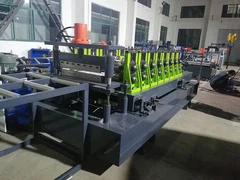
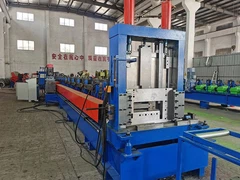
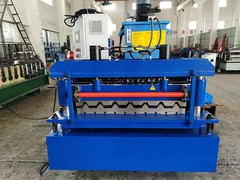
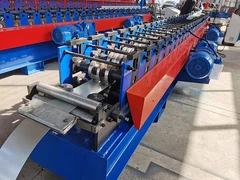
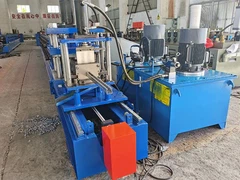
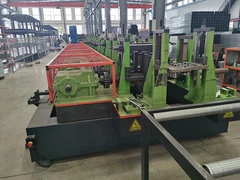
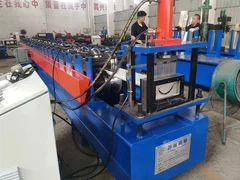
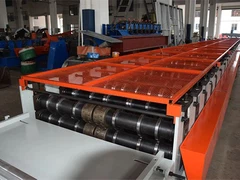
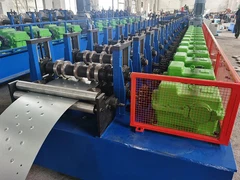
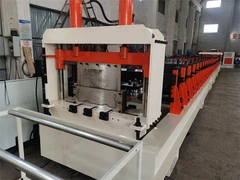

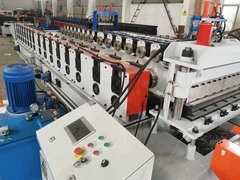
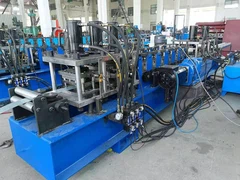

As core equipment for continuously processing metal strips into high-precision profiles at room temperature, the stable operation and excellent performance of cold rolling forming machines depend on a scientific understanding and reasonable creation of the applicable environment. The applicable environment refers not only to the layout and conditions of the physical space, but also encompasses factors such as temperature and humidity, cleanliness, power supply, and foundation bearing capacity. These factors collectively determine whether the equipment can maintain forming accuracy, production efficiency, and reliability over a long period.
From an industry application perspective, cold rolling forming machines are widely used in steel structure construction, transportation facilities, logistics warehousing, equipment manufacturing, and decorative materials. In the construction industry, they are commonly used to produce light steel keels, C/Z-shaped steel, wall purlins, and roof purlins. These applications typically require the equipment to continuously supply large quantities of long profiles to adapt to the assembly rhythm on construction sites. In the transportation sector, they are used to manufacture guardrails, rail supports, and vehicle frame profiles, with extremely high requirements for dimensional consistency and surface quality. In the logistics and warehousing industry, the focus is on the mass production of load-bearing components such as rack uprights and beams. The diverse production tasks across different industries necessitate that equipment possess the flexibility to handle switching between multiple specifications and materials, and also impose specific requirements on the stability and adaptability of its applicable environment.
Physical spatial layout is a fundamental element of the applicable environment. Cold rolling forming machines are typically long, continuous production lines. From uncoiling, leveling, guiding, forming, length cutting to discharge collection, each unit must be arranged in a straight line or slight arc according to the process sequence to ensure that the strip and profiles do not veer or make sharp turns during transportation, reducing running resistance and the risk of surface scratches. Sufficient operating and maintenance passages must be reserved within the workshop to facilitate personnel inspection, roll changing, and emergency response. Simultaneously, the rational connection between the coil storage area, finished product temporary storage area, and lifting and transportation channels should be considered to form a smooth logistics path, avoiding reduced material handling efficiency or potential safety hazards due to limited space.
Temperature and humidity conditions significantly affect the operational stability of cold rolling forming machines. Although the forming process takes place at room temperature, drastic fluctuations in ambient temperature can cause slight thermal expansion and contraction of the metal strip and equipment components, thus affecting the roll gap accuracy and profile dimensional stability. Ideally, the ambient temperature should be controlled between 15℃ and 30℃ and kept relatively stable, with fluctuations not exceeding ±3℃/h. Relative humidity should be maintained between 40% and 70%. Excessive humidity can lead to condensation and corrosion on metal surfaces, while insufficient humidity may cause electrostatic dust adsorption, affecting the surface quality of the strip and the accuracy of sensor detection. For production lines with high precision requirements, a constant temperature and humidity workshop or a local air conditioning system can be considered.
Cleanliness and pollution prevention measures are equally important. During cold rolling, the surface of the strip directly determines the appearance quality of the profile. If there is excessive dust, oil, or metal particles in the environment, they may adhere to the roller surface or embed into the profile surface during rolling, forming defects. The workshop floor should be made of dustproof and non-slip materials and cleaned regularly. Critical parts of the equipment (such as rollers, guide devices, and detection sensors) should be equipped with protective covers and positive pressure air curtains to reduce the intrusion of external contaminants. When processing materials that are prone to leaving marks, such as stainless steel and aluminum alloys, the cleanliness of the environment should be strictly controlled, and air purification and filtration systems should be installed if necessary.
Power and energy supply are essential for the normal operation of the equipment. Cold rolling forming machines rely on high-power motors to drive the rollers and feeding mechanism, and the CNC system, sensors, and lighting require a stable power supply. Voltage fluctuations should be controlled within ±5% of the rated value, and the frequency should remain stable. It is recommended to connect a dedicated transformer and configure voltage stabilization and uninterruptible power supply devices to prevent equipment damage or data loss due to power grid interruptions or shocks. If the hydraulic system uses hydraulic oil to drive cutting or assist forming, the oil temperature must be ensured to be within the equipment's specified range, and cooling and filtration devices should be provided to maintain oil cleanliness and suitable viscosity.
Foundation and vibration isolation are often overlooked but crucial aspects of the operating environment. Cold rolling forming machines generate certain mechanical vibrations during high-speed continuous operation. If the foundation's bearing capacity is insufficient or the installation surface is uneven, it can cause slight displacement of the frame, disrupting the stability of the roll gap and forming trajectory, thus affecting the profile accuracy. The equipment should be installed on a reinforced reinforced concrete foundation. The foundation depth and reinforcement should be designed based on the equipment weight and vibration source characteristics, and an appropriate distance should be maintained from the foundations of surrounding heavy equipment. Vibration isolation trenches or damping pads should be used where necessary to reduce cross-vibration interference.
Personnel safety and working environment comfort also fall under the scope of the applicable environment. The equipment must be equipped with complete mechanical guardrails, emergency stop buttons, and interlocking devices to prevent limb entanglement and misoperation. The operating area should have sufficient lighting without glare, and the height and tilt angle of the control console should conform to ergonomics to reduce fatigue during long-term operation. Noise control can be achieved through equipment vibration reduction, soundproof enclosures, and sound absorption treatment in the workshop, meeting occupational health standards and providing humanistic protection for stable and efficient production.
In summary, the applicable environment for cold rolling forming machines is a technical ecosystem composed of multiple dimensions, including spatial layout, temperature and humidity, cleanliness, power supply, foundation vibration, and safety and comfort. Only when these conditions are met can the equipment fully leverage its advantages of precision forming and efficient continuous operation, providing reliable support for profile manufacturing in industries such as construction, transportation, logistics, and equipment manufacturing, and ensuring long-term operational stability and economy.