
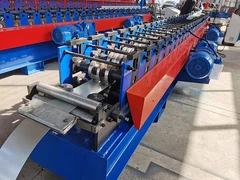
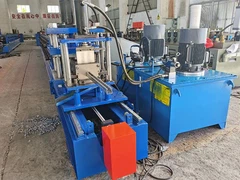
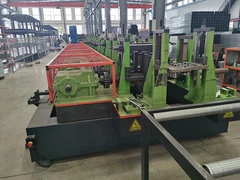
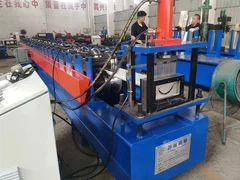
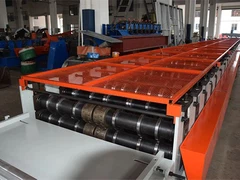
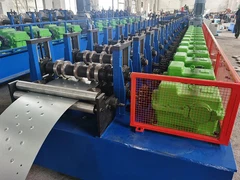
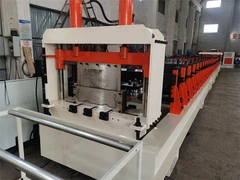

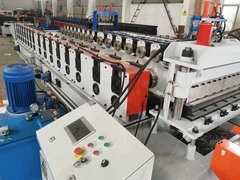
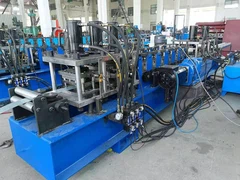

In modern manufacturing, molding machines, as core equipment for material shaping and component fabrication, have evolved into various types due to differences in process objectives and processing objects. The differences in structural form, working principle, and applicable scenarios directly influence the selection logic for production efficiency and product quality. Clearly understanding the essential differences between various molding machines is a crucial prerequisite for scientifically configuring production lines and optimizing processes.
Based on the mode of energy application, molding machines can be divided into mechanical molding, hydraulic molding, and pneumatic molding. Mechanical molding machines rely on a crank-connecting rod or screw mechanism driven by a motor to generate extrusion or impact force. They are suitable for applications requiring high instantaneous force values, such as metal cold heading and plastic extrusion. Their advantages lie in rapid operation and a short transmission chain, but their adaptability to load fluctuations is relatively limited. Hydraulic molding machines use high-pressure liquid as the force transmission medium, capable of outputting large tonnage and continuously adjustable pressure. They are suitable for processes requiring stable pressure holding, such as thick plate stretching and composite material molding. Their flexible control capabilities are outstanding, but their system complexity and energy consumption are relatively high. Pneumatic molding machines utilize compressed air to apply pressure and are primarily used for processing lightweight materials such as thermoplastic sheet forming and film forming. They are characterized by cleanliness and fast response, but are limited by the compressibility of gas, making it difficult to achieve extremely high molding precision.
Based on differences in molding mechanisms, they can be further classified into compression molding, injection molding, and die casting machines. Compression molding directly extrudes material through a closed mold and is commonly used in rubber products and thermosetting plastics processing, emphasizing uniform flow and cross-linking reactions of the material within the mold. Injection molding injects molten material into the mold cavity at high speed, suitable for complex, thin-walled products, but requires stringent temperature control and metering accuracy. Die casting is specifically used for rapidly filling molten metal under high pressure, producing high-precision, high-density metal parts, but requires a robust mold temperature control and demolding system.
In terms of material adaptability, general-purpose molding machines are mostly optimized for a single type of material, such as thermoplastic machines specializing in plastics or cold stamping machines specializing in metals. Composite or multi-material molding machines, on the other hand, use modular design to accommodate multiple raw materials, even achieving simultaneous or sequential molding of multiple components, expanding the process boundaries but increasing the difficulty of equipment debugging and maintenance.
The segmentation of application areas has also given rise to specialized models, such as isostatic presses for dry pressing of ceramics, twin-screw extruders for food molding, and continuous roller presses for molding building materials. These are specifically designed in terms of structural dimensions, temperature control range, and pressure curves.
In summary, the differences between molding machines stem from the diverse differentiation of energy forms, molding mechanisms, material compatibility, and application goals. Understanding these differences helps companies accurately match process requirements when selecting machines, achieving the optimal balance between equipment efficiency and economic benefits.