
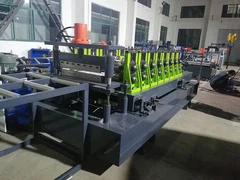
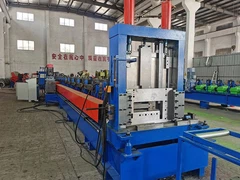
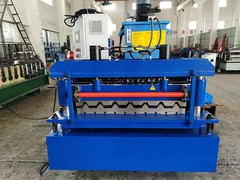
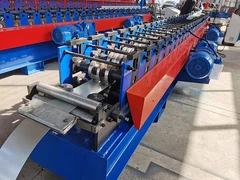
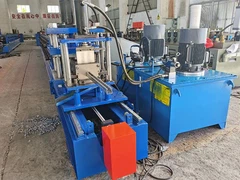
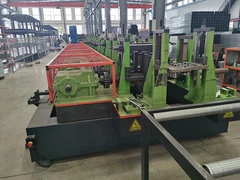
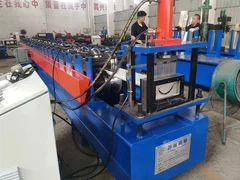
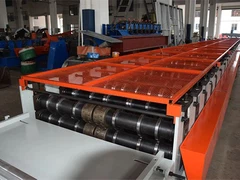
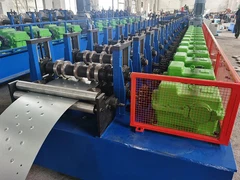
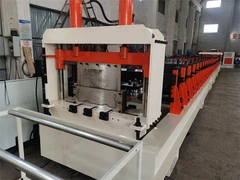

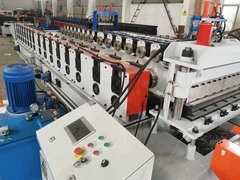
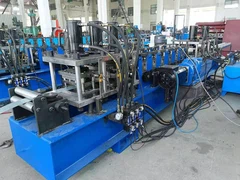

In the metal processing industry's journey towards higher efficiency, precision, and scale, metal roll forming machines, with their unique technological advantages and wide applicability, have become indispensable core equipment. Their importance permeates multiple dimensions of profile production, including quality assurance, efficiency improvement, and industrial upgrading.
The importance of metal roll forming machines is primarily reflected in their transformative improvement in production efficiency. Traditional metal profile processing relies heavily on discrete processes such as stamping and molding, resulting in frequent loading and unloading, process interruptions, and intermediate transfers. This limits production pace and requires significant manual intervention. Roll forming, however, utilizes a continuous rolling forming principle. After uncoiling and leveling, metal strip is directly formed into the target cross-section profile through multiple progressive roll forming passes, achieving continuous length cutting without stopping the machine. This significantly reduces the production cycle and substantially increases output per unit time. For long-length, high-volume C-shaped steel, Z-shaped steel, and light steel keel products, this continuous operation mode meets the dual demands of modern manufacturing for rapid delivery and economies of scale, becoming key to improving production line throughput.
Its importance is equally prominent in terms of forming quality and precision control. Roll forming, through progressively decreasing roll gaps and gradually changing roll profiles, ensures uniform strain distribution during plastic deformation of the metal, effectively controlling springback and stress concentration, and guaranteeing a high level of dimensional tolerance and shape consistency in the finished product. Progressive forming also improves metal fiber flow, enhances the mechanical properties and stability of the profile, reduces subsequent shaping and grinding processes, and lowers the defect rate. For applications such as building structural components, transportation facility profiles, and high-precision shelving systems, this translates to higher safety, reliability, and assembly efficiency, directly impacting the quality and lifespan of the final product.
The improved economic efficiency and resource utilization further highlight its strategic importance. Roll forming is a near-net-shape forming process, with significantly higher material utilization than traditional cutting or stamping methods, producing almost no significant waste. For high-priced materials such as galvanized steel sheets and stainless steel strips, it can significantly reduce raw material loss and costs. Continuous operation, coupled with low energy consumption and easy maintenance through modular design, effectively controls overall operating costs, shortens the return on investment cycle, and provides a solid foundation for enterprises to build a cost competitive advantage.
Flexibility and market responsiveness demonstrate its key value in a volatile market environment. Modern metal roll forming machines are equipped with CNC systems and quick-change roller mechanisms, enabling rapid switching between different cross-sectional specifications and easily handling customized needs for diverse varieties and small batches. From light steel structures for buildings to logistics and warehousing profiles, from decorative components to special-purpose profiles, its cross-domain adaptability allows enterprises to quickly seize market opportunities and enhance their bargaining power and resilience in the industrial chain.
Furthermore, under the macro-background of green manufacturing and sustainable development, metal roll forming machines help enterprises achieve low-carbon production goals by reducing waste emissions, lowering energy consumption, and reducing reliance on manual labor. Their technological advancements also drive the metal processing industry towards high-end and intelligent manufacturing.
In conclusion, with its comprehensive advantages of high efficiency and continuity, precise control, economical material saving, and versatility, the metal roll forming machine has become an irreplaceable core pillar in the modern metal profile manufacturing system. Its importance lies not only in solving the current efficiency and quality problems in production, but also in providing solid equipment support for industrial upgrading and green development, and continuously releasing the core driving force for promoting high-quality development of the industry.