
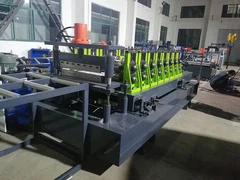
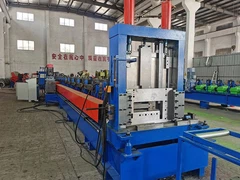
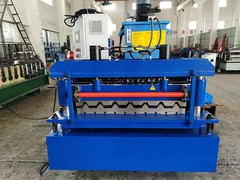
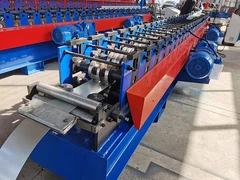
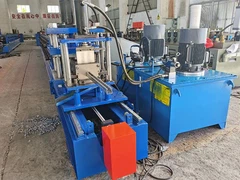
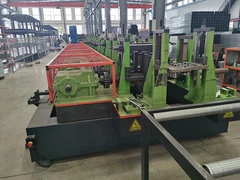
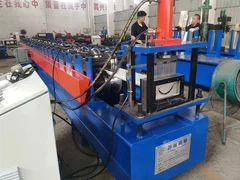
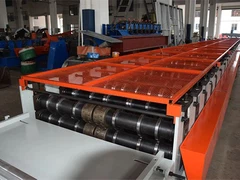
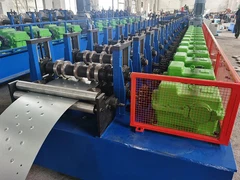
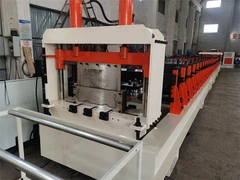

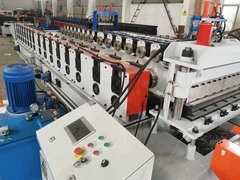
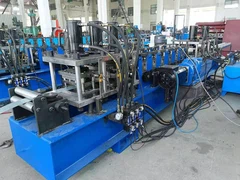

As the core equipment for transforming metal sheets into high-precision profiles at room temperature, the full release of the performance of cold rolling forming machines depends not only on the manufacturing precision of the equipment itself, but also on the user's in-depth understanding of the process principles and operating procedures. Through long-term practice, a series of effective usage techniques have been developed, covering aspects such as material preparation, parameter setting, process control, handling anomalies, and daily maintenance. These techniques can significantly improve forming quality, reduce failure rates, and extend the equipment's service life.
In the material feeding and pretreatment stage, the key technique is to ensure the matching of the strip condition with the equipment's feeding conditions. Cold rolling has high requirements for the strip's shape and surface quality. If the strip has obvious waviness, warping, or edge burrs, it is very easy to cause deviation, wrinkling, or cross-sectional distortion during the rolling process. Therefore, before feeding, internal stress should be fully eliminated using a leveling machine, and the fit between the inner diameter of the coil and the clamping range of the uncoiling mechanism should be checked to prevent loosening or deviation during unwinding. For strips with oil or dust on the surface, moderate cleaning is recommended to prevent contaminants from entering the roll gap and affecting the surface quality of the profile and the life of the rollers.
Parameter setting and pass matching are core techniques for forming quality. Cold rolling relies on multiple sets of sequentially arranged forming rollers to gradually reduce the roll gap and gradually change the roll profile, allowing the strip to bend and extend to the target cross-section. When setting parameters, it is necessary to consider the material thickness, yield strength, and geometric characteristics of the target shape, and rationally allocate the reduction amount for each pass: the first few passes should use small deformations to guide the forming and reduce the risk of wrinkling and tearing; the reduction amount should be gradually increased in the middle stages to approximate the profile; the final pass should be used for fine shaping to control springback and dimensional accuracy. Avoid excessive deformation at one time, otherwise it can easily lead to excessive local stretching or stress concentration, affecting the mechanical properties of the finished product.
The key to operation lies in the coordinated control of feeding and pressure. The feeding speed should be matched with the roller speed and forming load. Too high a speed can easily cause insufficient or excessive stretching of the strip, while too slow a speed will reduce efficiency and may cause work hardening. Skilled operators will make real-time fine-tuning adjustments based on the profile forming status and utilize the closed-loop feedback function of the CNC system to ensure smooth transitions in speed and pressure between passes. Simultaneously, attention should be paid to roller temperature changes. If the frictional heat generated during continuous operation is not dissipated in time, it can lead to a decrease in roller surface hardness or expansion and deformation, thus affecting forming accuracy. Regular checks of cooling and lubrication are essential.
Anomaly identification and rapid handling are crucial components of operational skills. Common forming defects such as side bending, twisting, uneven ends, or surface scratches are often related to strip feed deviation, uneven roller gap, or tool wear. Experience shows that upon discovering an anomaly, the machine should be stopped immediately to check the feed guide and roller profile condition. Only after confirming the absence of foreign objects and damage should parameters be adjusted and the first piece retested. For frequently occurring similar problems, the source should be traced back to the material batch, equipment condition, and process parameters to avoid relying on temporary remedies that could lead to batch defects.
Daily maintenance and management of consumable parts also involve skill. Wear on forming rollers, guide blocks, and cutting tools directly affects profile quality. A regular inspection and grinding system should be established to maintain roller profile consistency with the design. Lubrication must be performed according to the oil type and cycle specified in the equipment manual, and attention should be paid to cleaning the oil filler port to prevent contaminants from entering. Qualified spare parts should be readily available for vulnerable components, and the replacement process should be optimized to minimize downtime.
Personnel skills training is fundamental to applying the above techniques. Systematic training should familiarize operators with the equipment's operating logic, material properties, and common anomaly handling methods, enabling them to quickly identify the cause and take countermeasures when deviations occur, reducing trial-and-error costs and improving production stability.
In summary, the operating techniques for cold rolling forming machines integrate practical experience in material pretreatment, scientific parameter allocation, dynamic operation control, rapid anomaly handling, and meticulous maintenance. Mastering and flexibly applying these techniques can not only significantly improve profile forming quality and production efficiency but also extend equipment life, providing solid support for enterprises to maintain a competitive edge in a highly competitive market.