
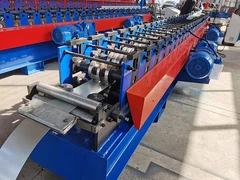
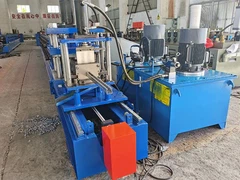
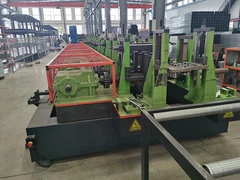
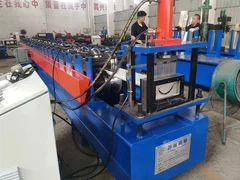
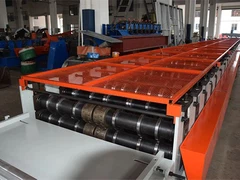
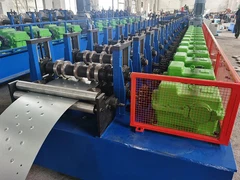
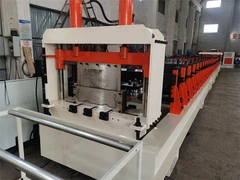

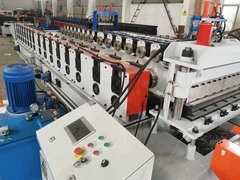
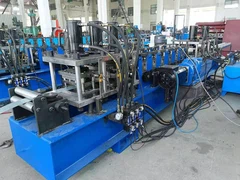

Cold rolling forming machines, as key equipment for transforming metal sheets into high-precision profiles at room temperature, rely heavily on the materials used for their structural performance and operational stability. Different components experience varying loads, friction, temperature rises, and environmental influences during operation; therefore, appropriate materials must be matched to functional requirements to achieve a balance of high strength, high rigidity, wear resistance, and corrosion resistance. The scientific selection of main materials for cold rolling forming machines is fundamental to ensuring long-term reliable operation and is crucial for improving profile forming accuracy and production efficiency.
The frame and bed are the main load-bearing components of the cold rolling forming machine and must possess excellent rigidity, vibration resistance, and dimensional stability. High-quality carbon structural steel or low-alloy high-strength steel, such as Q235B and Q345B, are typically used. After welding or integral casting, they undergo aging treatment and precision machining to eliminate internal stress and reduce the risk of deformation. For high-precision or large-scale equipment, tempered alloy structural steel is also selected to enhance fatigue strength and impact resistance, ensuring consistent geometric accuracy during long-term continuous operation.
Forming rollers are core components that directly affect the profile's contour accuracy and surface quality, requiring a balance of high hardness, wear resistance, and a certain degree of toughness. Commonly used materials include high-carbon chromium bearing steel (such as GCr15), high-speed steel (W18Cr4V), or surface-modified alloy steel. To further enhance wear resistance and anti-adhesion properties, forming rollers often undergo surface hardening, carburizing, or nitriding treatments to form a hard, wear-resistant layer while maintaining core toughness to prevent brittle fracture under heavy impact. For rollers processing special materials such as stainless steel and aluminum alloys, hard alloy or ceramic coatings are also used to reduce material adhesion and the risk of roller surface damage.
Transmission system components such as spindles, gears, bearings, and couplings primarily bear cyclic loads and friction, requiring high fatigue strength and good wear resistance. The spindle and gears are mostly made of high-quality alloy tempered steel (such as 40Cr and 20CrMnTi) and surface hardened to improve contact fatigue strength and wear resistance. Rolling bearings use high-carbon chromium bearing steel or ceramic hybrid bearings to ensure low friction and long service life under high-speed continuous operation. Couplings are made of high-strength forged steel or ductile iron, depending on torque and alignment requirements, balancing toughness and torsional stiffness.
The guiding and positioning devices ensure the strip and profile move along a predetermined trajectory during the forming process, requiring good dimensional stability and wear resistance. Commonly used materials include medium-carbon steel or alloy structural steel, which are tempered and then surface-hardened using high-frequency quenching to improve wear resistance and deformation resistance. For high-precision guide components, age-hardened aluminum alloys or cast iron can also be used, utilizing their low coefficient of thermal expansion to maintain dimensional stability.
The cutting tools and tool holders in the cutting mechanism are subjected to high-frequency impact and wear, requiring high-hardness, impact-resistant tool steel (such as Cr12MoV and SKD11) and vacuum heat treatment to ensure sharp cutting edges and durability. The tool holder is constructed from welded or cast structural steel, reinforced with ribs to absorb impact loads and maintain positioning accuracy.
Auxiliary components such as protective covers, operating tables, and connectors, while not directly involved in the forming process, have material choices that significantly impact equipment safety and lifespan. Protective covers are typically made of cold-rolled steel or aluminum alloy profiles, coated with anti-corrosion paint to prevent rust. Operating table surfaces are made of non-slip, wear-resistant patterned steel or engineering plastic sheets. Bolts, nuts, and other fasteners are generally made of high-strength stainless steel or galvanized carbon steel to prevent loosening and corrosion.
Under special operating conditions, such as processing highly corrosive materials or operating in humid environments, exposed components and those easily exposed to the medium must be made of corrosion-resistant materials, such as 304 or 316 stainless steel, or composite structures with anti-corrosion coatings, to extend service life and reduce maintenance frequency.
In general, the selection of main materials for cold rolling forming machines follows the principles of "functionality first, performance matching, and process feasibility." Through reasonable material combinations and heat treatment processes, the various components complement each other in terms of strength, rigidity, wear resistance, corrosion resistance, and dimensional stability, thus providing a solid material foundation for the precision forming, efficient continuous operation, and safe and reliable operation of the equipment. This optimization of the material system not only improves the overall performance of the machine but also provides scalable technical support for profile processing in different industries.